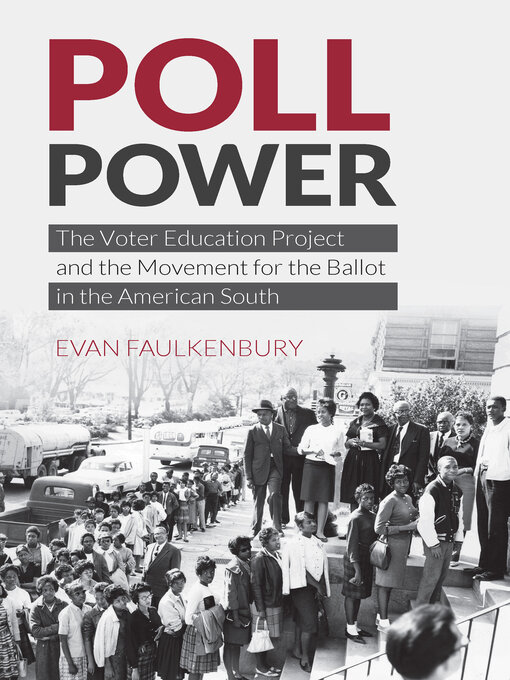
The civil rights movement required money. In the early 1960s, after years of grassroots organizing, civil rights activists convinced nonprofit foundations to donate in support of voter education and registration efforts. One result was the Voter Education Project (VEP), which, starting in 1962, showed far-reaching results almost immediately and organized the groundwork that eventually led to the Voting Rights Act of 1965. In African American communities across the South, the VEP catalyzed existing campaigns; it paid for fuel, booked rallies, bought food for volunteers, and paid people to canvass neighborhoods. Despite this progress, powerful conservatives in Congress weaponized the federal tax code to undercut the important work of the VEP.
Though local power had long existed in the hundreds of southern towns and cities that saw organized civil rights action, the VEP was vital to converting that power into political motion. Evan Faulkenbury offers a much-needed explanation of how philanthropic foundations, outside funding, and tax policy shaped the southern black freedom movement.
- Mental Health Matters
- Available Now
- Addiction & Recovery
- A*D*R*E*N*A*L*I*N*E!!
- Agriculture & Nutrition: Food for Our Table
- All About Money - Yours, Theirs, Ours
- All About Ukraine
- Alzheimer's, Dementia & the Brain as You Age
- Art of the Culinary Variety
- Babies & Beginnings
- Baked for the Holidays
- Be a Citizen Scientist!
- Better with a Sweater: Crafts, Cookbooks & Cozy Reads
- See all ebooks collections
- Preparing for Emergencies
- Available Now
- Addiction & Recovery
- A*D*R*E*N*A*L*I*N*E!!
- Agriculture & Nutrition: Food for Our Table
- All About Money - Yours, Theirs, Ours
- Alzheimer's, Dementia & the Brain as You Age
- Art of the Culinary Variety
- Babies & Beginnings
- Better with a Sweater: Crafts, Cookbooks & Cozy Reads
- Body Positivity for EveryBODY
- The Case of the Checked-Out Mystery
- Dark Academia
- See all audiobooks collections
